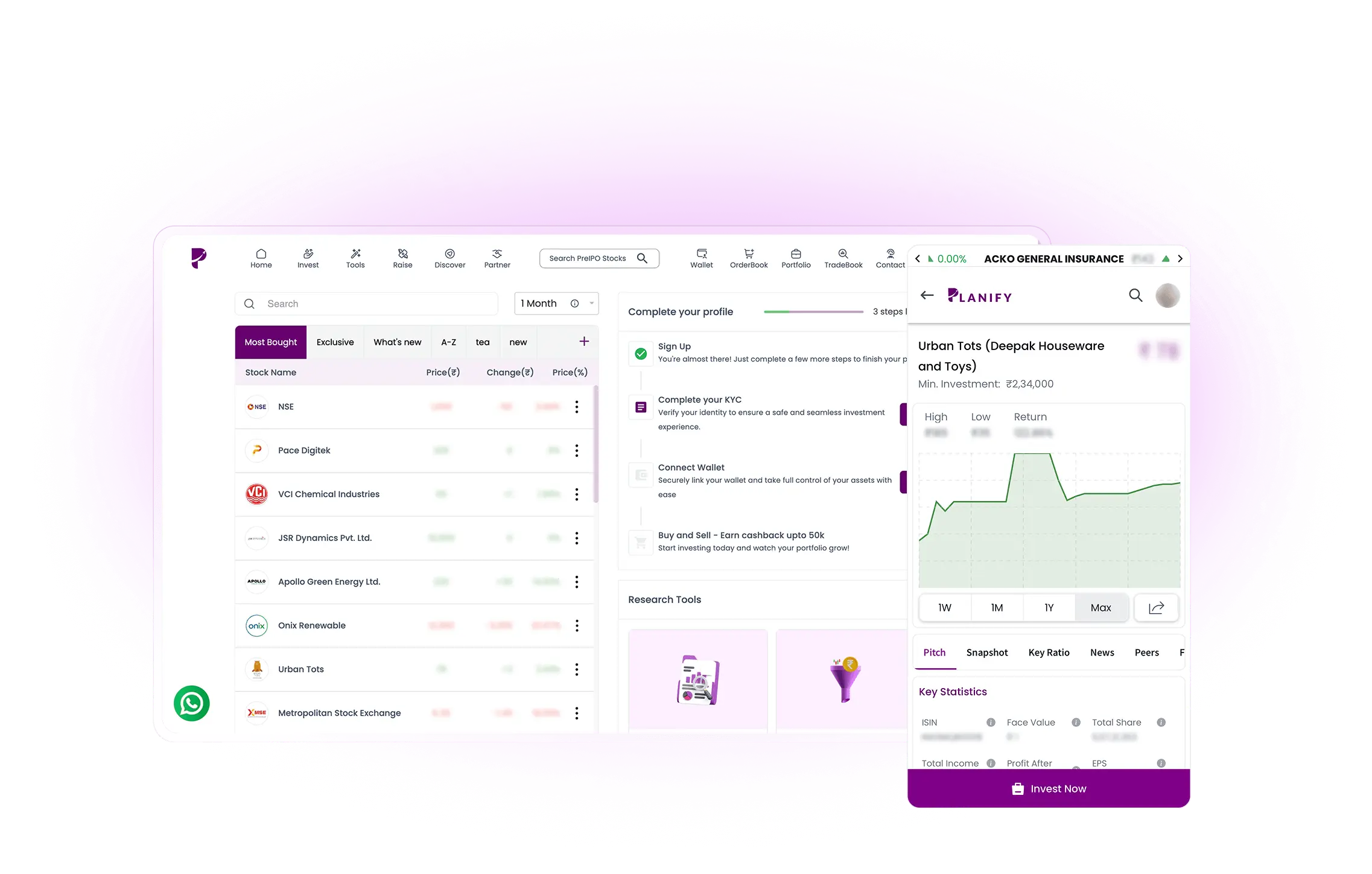









You can start investing with Planify with a minimum investment of just ₹10,000.
 1 Lakh+ Investors trust us, be the next
 Buy Or Sell Pre-IPO Unlisted Shares of India at Best Prices.For Accredited Investors Privately.
Pre-IPO Unlisted Shares
of India at Best Prices.
Discover the Market Beyond the Market
Explore a dynamic range of top-performing unlisted stocks—from high-growth startups to established private giants. These are the companies shaping the future—now just a click away.
How does it Work - Simple Steps to Start Your
Unlisted Investment Journey
Investing in unlisted shares is now as easy as browsing. From discovering opportunities to executing secure transactions—Planify simplifies every step of the journey.
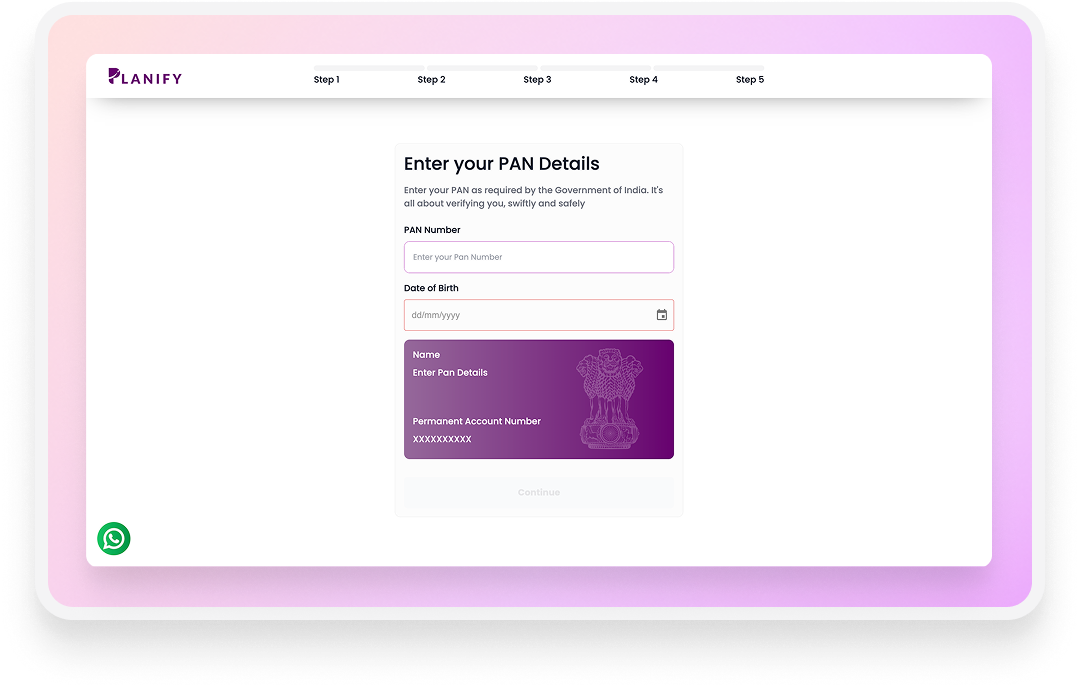
Sign up & KYC 
Quick & Easy Investor Verification
Complete your KYC in just 2 minutes to unlock exclusive investment opportunities. Get verified effortlessly and start exploring high-growth startups and private boutique companies without any delays.
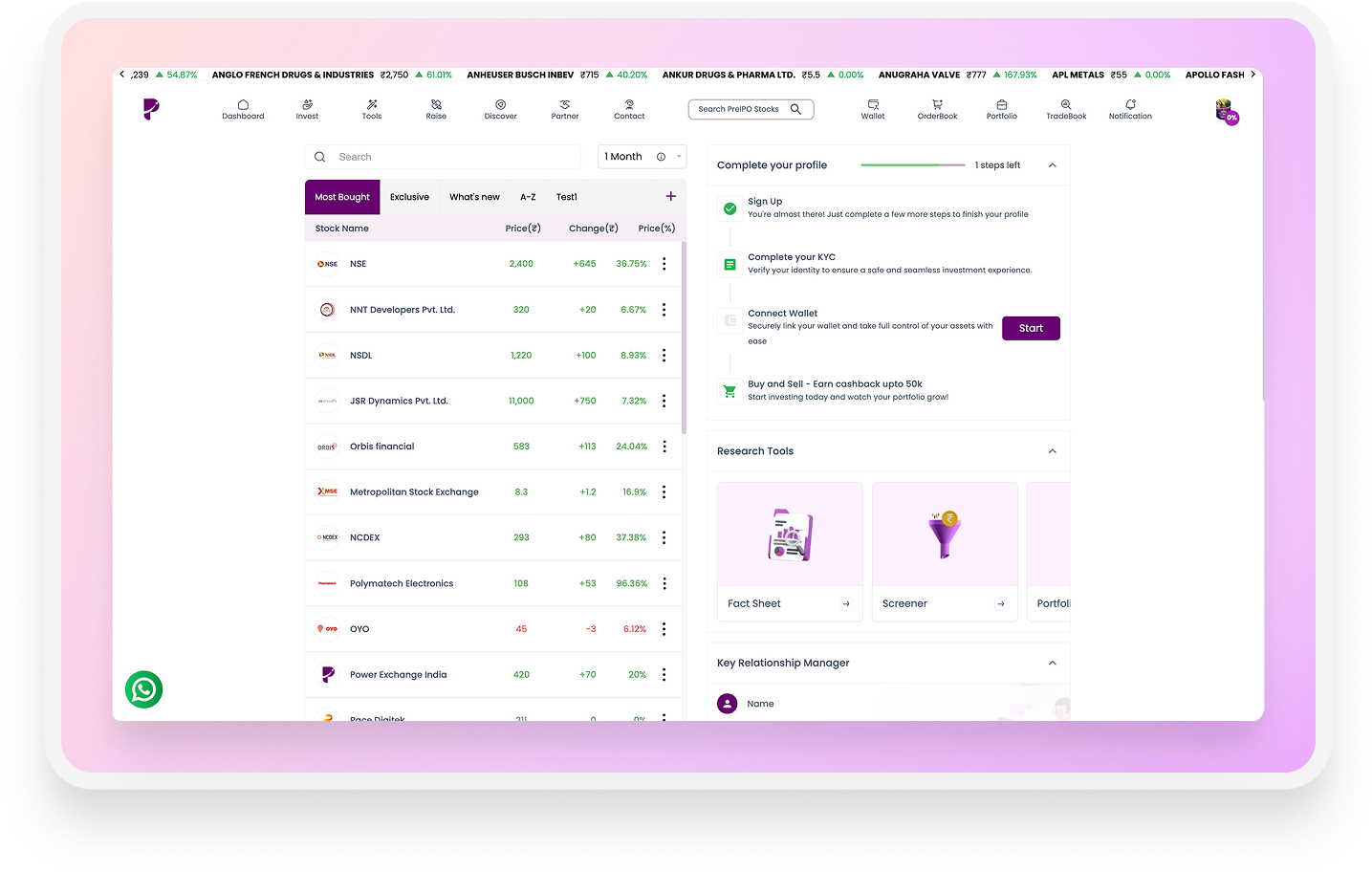
Browse
Discover Exclusive Investment Opportunities
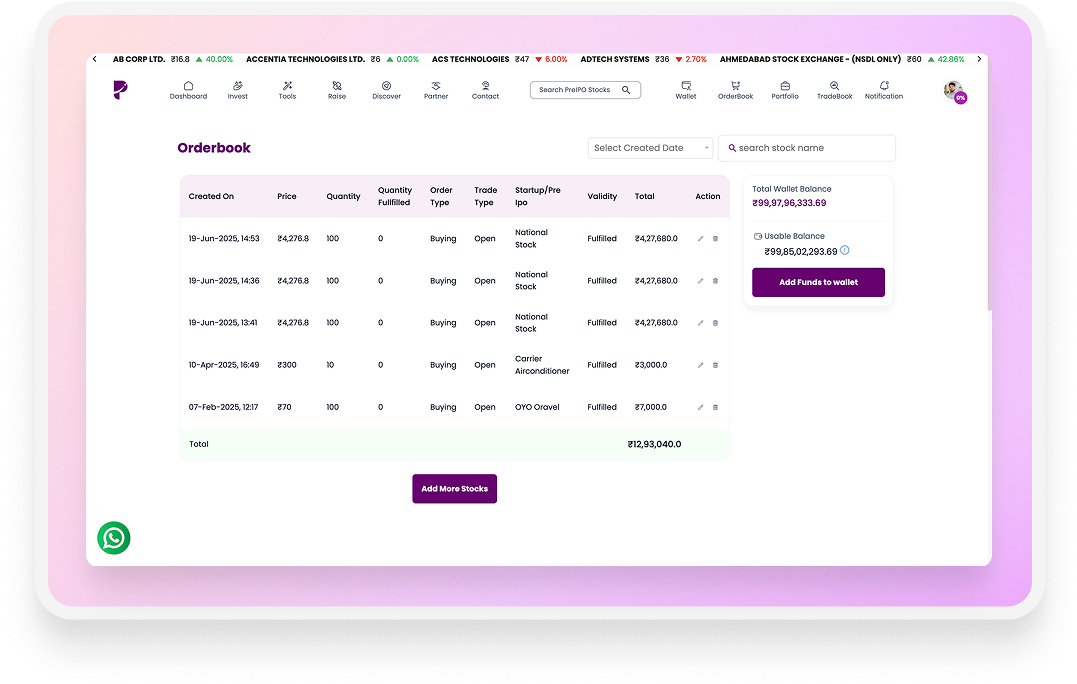
Browse through a curated selection of startups and private companies. Add your preferred investments to your order book and secure your stake in the next big opportunity before it's too late.
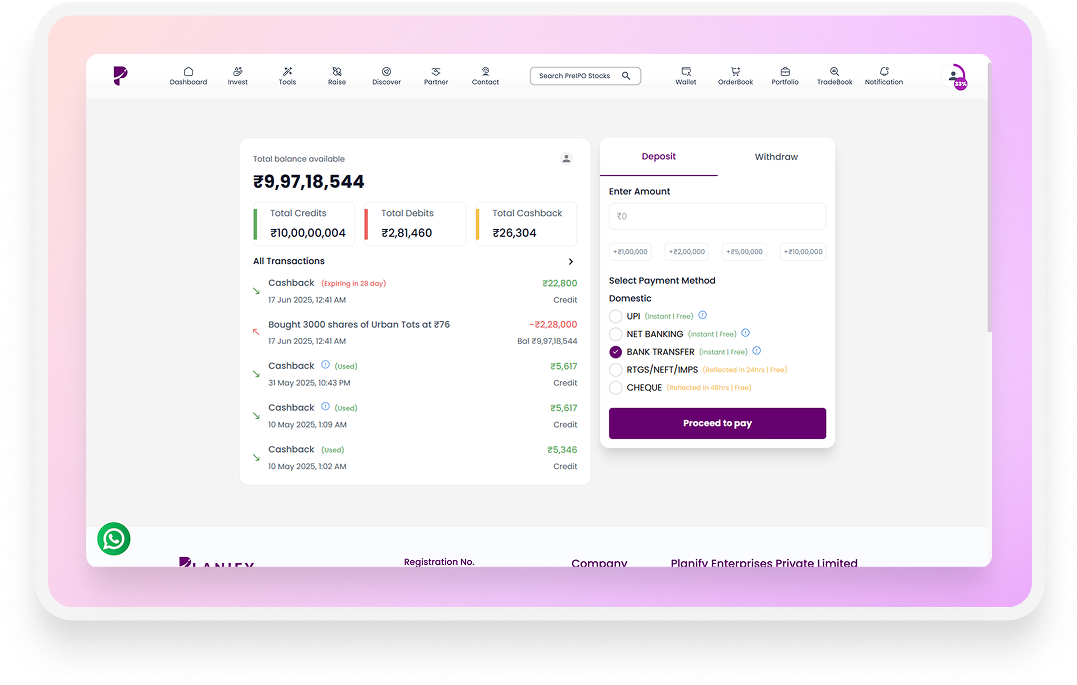
Pay
Flexible & Secure Payment Options
Fund your investments conveniently with multiple payment methods, including UPI, NEFT, and RTGS. Enjoy a seamless and secure transaction process tailored to your financial preferences and ease of access.
Delivery of Shares
Swift Share Transfer to Your DEMAT
Once your payment is processed, receive your shares directly in your DEMAT account by T+1 day. Experience a hassle-free and efficient stock transfer process with complete transparency.
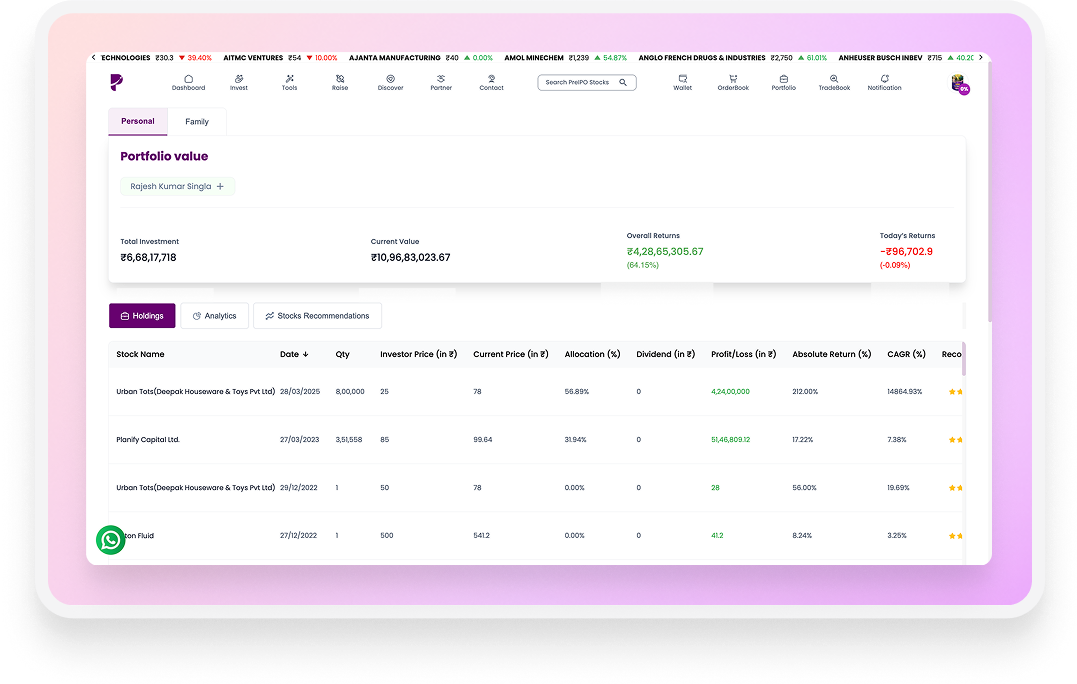
Manage Portfolio
Track and Optimise your Investment Portfolio
Monitor your investments, manage essential documents, and stay updated on your portfolio's performance. Get real-time insights and notifications on your holdings to make informed financial decisions.
Unlisted Unmatched
The most trusted platform for investing in pre-IPO and private companies.
1 Lakh+
Active Investors
1600+
Unlisted Companies
250+
Active Brokers
10 yrs +
of Industry Expertise
24 x 7
Share Buying & Selling Access
Tools to Power Your Investment Journey
Explore our powerful suite of tools crafted for retail investors to make smarter, faster, and safer decisions in the unlisted market.
In the Press
Leading publications and platforms that have covered our journey.





Rated Across Platforms
Verified ratings across independent review and app platforms.
What Our Investors Say
“Raising funds through Planify was a move that played exceptionally well for us. Their network of investors, coupled with their expertise in crafting compelling pitches, helped us secure crucial investments that fueled our growth. Planify made our fundraising efforts efficient and effective.”

Deepak Chaudhary
Director, Urban Tots (Deepak Houseware & Toys)
Download Our App
Trade on the go with Planify App
Join 1 Lakh+ investors already using Planify to access exclusive
private market deals with real-time alerts and tools.
35K+
App Downloads
4.4
App Rating
25K+
Active Monthly Users
₹600 Cr+
Deals Facilitated
Invest Smarter, Choose Your Plan
Access exclusive unlisted shares, expert insights, and early-stage deals — tailored to your investment goals.
Frequently Asked Questions (FAQs)
What is the minimum investment amount on Planify?
What are unlisted shares?
Unlisted shares are shares of companies that are not listed on any stock exchange, like the NSE or the BSE. These companies are privately held, and their shares are traded through private deals. Planify connects investors to these exclusive opportunities in India’s unlisted space.
What are Pre-IPO shares?
Pre-IPO shares refer to the shares of a company purchased before its Initial Public Offering (IPO), when it lists on a public stock exchange. These shares are essentially a subset of unlisted shares, specifically those from companies that are on the path to going public shortly. Planify can offer exclusive pre-IPO deals and early access to high-growth potential companies and the possibility of significant returns upon their successful public listing.
What is the difference between unlisted shares and pre-IPO shares?
The terms "unlisted shares" and "Pre-IPO shares" are related but distinct. Unlisted shares encompass all shares of companies not traded on public exchanges, regardless of their immediate plans to go public. Pre-IPO shares, on the other hand, specifically refer to unlisted shares of companies that are nearing their Initial Public Offering (IPO). Essentially, all pre-IPO shares are unlisted, but not all unlisted shares are pre-IPO. Planify offers a broad spectrum of both unlisted and pre-IPO opportunities, providing diverse investment options.
Is it illegal to buy unlisted shares?
No, buying unlisted shares is not illegal in India. These are private, off-market transfers between a buyer and a seller, credited through the depositories (NSDL/CDSL). Platforms that facilitate these transactions, including Planify, are not recognised stock exchanges, so investors do not get exchange safeguards such as SEBI's investor-protection and grievance-redressal mechanisms. Before paying, verify the company's ISIN, the seller's details and the transfer documents.
What regulatory compliance is required for unlisted share transactions?
Unlisted shares are transferred off-market between demat accounts. Both parties need KYC-compliant demat accounts, and payment must go through banking channels. The seller submits an off-market instruction to their DP marked as “sale,” and the depository collects 0.015% stamp duty from the seller. The shares must be in demat form, and any transfer restrictions in the Articles of Association must be followed. If an NRI is involved, FEMA pricing rules and Form FC-TRS reporting apply, and the buyer must deduct TDS.
How and when do shares reflect in my demat account?
Once you invest in unlisted shares through Planify, the shares are transferred to your demat account through an off-market transfer via NSDL or CDSL. The transfer is initiated after your payment is received and confirmed. Shares generally reflect within T+1 working days, where T is the date your payment is confirmed, though some deliveries may take longer, for example when a company requires approval for the transfer. Unlisted shares may not appear in your broker app’s holdings, so check your demat statement or the CAS from NSDL or CDSL. If your shares don’t reflect within the expected time, contact the Planify support team.
How to calculate the fair market value of unlisted shares?
The fair market value (FMV) is typically determined using various financial metrics, such as recent transactions, valuations in funding rounds, and earnings multiples. Planify provides fact sheets and price discovery tools to help investors assess fair value.
Can an unlisted company give dividends?
Yes, an unlisted company can give dividends to its shareholders. The company's board typically decides to issue dividends based on its profitability, cash flow, and future investment needs. While many high-growth unlisted companies may choose to reinvest profits back into the business for expansion rather than distributing dividends, this is a possibility, depending on the company's dividend policy. Planify also provides information on a company's historical dividend practices, if applicable.
What are the tax implications of unlisted shares?
Gains on unlisted shares are capital gains. If you hold the shares for more than 24 months, gains are long-term and taxed at 12.5% without indexation, plus applicable surcharge and cess. The ₹1.25 lakh exemption does not apply to unlisted shares. If you hold them for 24 months or less, gains are short-term and taxed at your income-tax slab rate. Consult a tax professional for your situation.
Is STT applicable to unlisted shares?
Securities Transaction Tax (STT) does not apply to transactions involving unlisted shares. STT is generally levied on transactions carried out on recognized stock exchanges in India. Since unlisted shares are traded in the off-market or over-the-counter (OTC) segment, they are exempt from STT.
How to declare unlisted shares in ITR?
When filing your Income Tax Return (ITR), you must declare your holdings and any gains or losses from unlisted shares. You typically need to provide details of:
- Acquisition Cost and Date: The price at which you purchased the shares and the date of acquisition.
- Sale Price and Date: The price at which you sold the shares and the date of sale.
- Holding Period: To determine whether the gains are short-term or long-term.
- Nature of Gain/Loss: Calculate the STCG or LTCG/Loss.
Specific forms and schedules in the ITR, such as Schedule CG (Capital Gains), would be used to report these details. It is highly recommended to seek guidance from a qualified tax advisor or chartered accountant to ensure accurate declaration and compliance with tax laws for unlisted shares.
Can unlisted shares be sold?
Yes. Unlisted shares can be sold to another investor through an off-market transfer between demat accounts. Planify buys and sells unlisted and pre-IPO shares, so you can sell your holding to us or through us. The shares must be in demat form, and any transfer restrictions in the company’s Articles must be followed. Liquidity is limited, so the price and timing of a sale depend on demand for that company’s shares.
Can Foreign Portfolio Investors (FPIs) invest in unlisted shares?
Yes, FPIs can invest in unlisted shares subject to compliance with SEBI, RBI, and FEMA regulations. These regulations often include limits on investment caps, sector-specific restrictions, and reporting requirements. FPIs typically invest through established channels and usually prefer companies with strong growth prospects and clear paths to liquidity events, such as an IPO.
Do NRIs or foreign investors have any restrictions?
NRIs and foreign investors can invest in unlisted shares, but they must follow RBI and FEMA guidelines. They generally face certain restrictions and compliance requirements when investing in unlisted shares in India. These restrictions are primarily related to:
- Reporting Requirements: Mandatory reporting of investments to the RBI.
- Repatriation of Funds: Rules Governing the Repatriation of Investment Proceeds.
- Payment Methods: Specific banking channels may be required for transactions.
While Planify facilitates investments for a wide range of investors, NRIs and foreign investors should consult with legal and financial advisors specializing in foreign exchange regulations and investment laws to ensure full compliance with all applicable rules and regulations.
What is the risk involved in buying unlisted shares?
Unlisted shares carry higher risk than listed shares because they trade outside stock exchanges. Liquidity is limited, so it may take time to find a buyer when you wish to sell, and a quick exit is not guaranteed. Price discovery is harder because these companies disclose less financial information and have fewer market comparables. A planned IPO may be delayed, cancelled, or priced below your purchase price, and pre-IPO shares are generally locked in for 6 months from IPO allotment (1 year for SME IPOs). Off-market deals also have no exchange settlement guarantee. You can lose part or all of your investment. Planify provides research reports, company financials, and key details on the unlisted shares we offer to help investors make informed decisions.
Let's Connect
Please provide the following details


+91